Maybe your credit score isn’t where you want it to be.
Maybe you’re rebuilding after a rough patch.
Or maybe you’re just tired of tying up money in a security deposit and want a regular card like everyone else.
I’ve worked with people on both sides of the credit spectrum — from those with excellent credit who qualify for almost anything, to those with poor credit who feel like every application ends in rejection. The truth is, unsecured credit cards are not “easy” because they’re handed out freely. They’re considered easier because they don’t require a security deposit. But approval still depends on how your overall credit profile looks.
In this guide, I’m going to walk you through what actually matters when applying for easy unsecured credit cards, how to improve your approval odds, how to use them wisely, and the common mistakes I see people make over and over again.
What Makes a Credit Card “Unsecured”?
An unsecured credit card simply means you don’t have to put down a security deposit to open the account.
With secured cards, you might deposit $300 and receive a $300 credit limit. That deposit protects the lender.
With unsecured cards, the bank is trusting you based on your creditworthiness — your credit score, income, debt levels, and history of responsible use.
Because there’s no deposit, the lender takes on more risk. That’s why interest rates can be higher, especially if you have bad credit or a low credit score.
But here’s the upside:
Used correctly, unsecured cards are one of the fastest ways to rebuild credit and move toward better financing options later.
Why People Look for Easy Unsecured Credit Cards
Most people looking for these cards fall into one of three categories:
They’re rebuilding after bad credit or poor credit history
They’re new to credit and don’t have much history
They want to graduate from secured cards
If you’re rebuilding, unsecured cards can help you prove that you can handle credit responsibly without tying up cash in a security deposit.
If you’re new to credit, they help you establish a track record.
If you’re moving up from a secured card, they show progress — and that matters.
What Actually Impacts Approval
Your Credit Score: What It Really Means (And Why It Matters So Much)
When we talk about easy unsecured credit cards, everything circles back to one number — your credit score.
But most people only know the number itself. They don’t really understand what goes into it, who creates it, or why lenders care so much about it.
Let’s break it down properly.
What Your Credit Score Actually Represents
Your credit score is not random. It’s not emotional. It’s not personal.
It’s a mathematical formula that predicts the likelihood that you’ll repay debt based on past behavior.
In simple terms, it answers this question:
Based on this person’s history, how risky is it to lend them money?
That’s it.
It looks at how you’ve handled credit over time and assigns a number that reflects your reliability.
If you’ve paid on time consistently, kept balances manageable, and avoided major delinquencies, your score rises.
If you’ve missed payments, maxed out cards, defaulted on accounts, or filed bankruptcy, your score drops.
When lenders review applications for easy unsecured credit cards, this number is one of the first filters.
How Your Credit Score Is Calculated (FICO Model)
The most widely used scoring model in the United States is FICO, created by Fair Isaac Corporation.
FICO has been around since 1989, and the majority of lenders — especially banks and mortgage companies — use some version of a FICO score when making lending decisions.
Your FICO score is generally made up of five categories:
1. Payment History – 35%
This is the biggest factor.
Have you paid your bills on time?
Even one 30-day late payment can cause noticeable damage. A 60- or 90-day late payment hurts even more.
Collections, charge-offs, repossessions, and bankruptcies carry serious weight here.
If you’re trying to rebuild credit, this is the area that matters most. Perfect payment history going forward is non-negotiable.
2. Amounts Owed (Credit Utilization) – 30%
This measures how much of your available credit you’re using.
If you have:
$1,000 total credit limit
$800 balance
You’re using 80%.
That signals risk.
Ideally:
Under 30% is acceptable
Under 10% is excellent
High utilization is one of the fastest ways to suppress your score — even if you’ve never missed a payment.
3. Length of Credit History – 15%
How long have you been managing credit?
Older accounts strengthen your score. That’s why closing old cards can sometimes hurt more than people expect.
Time builds credibility.
4. New Credit (Inquiries) – 10%
Each time you apply for credit, a hard inquiry appears on your report.
One inquiry is minor.
Five in a short period? That looks like financial stress.
This is why applying for multiple easy unsecured credit cards at once can backfire.
5. Credit Mix – 10%
Lenders like to see different types of cards and loans managed responsibly.
Examples:
Credit cards
Auto loans
Installment loans
Mortgages
You don’t need every type. But showing you can handle more than one form of credit can strengthen your profile.
FICO Score Ranges
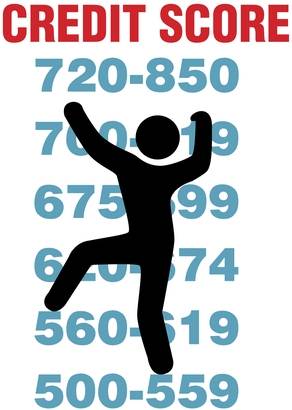
FICO scores typically range from 300 to 850.
Here’s how they break down:
800–850 → Exceptional (often considered excellent credit)
740–799 → Very Good
670–739 → Good
580–669 → Fair
300–579 → Poor (often associated with bad credit)
If you’re above 700, approval for unsecured credit cards becomes much easier.
If you’re in the 600s, you still have solid options — though limits may start lower.
Below 580, approval becomes more difficult, and terms may include higher interest rates or annual fees.
But even in that range, there are still types of cards available.
What Is VantageScore?
The second major scoring model is VantageScore, created jointly by the three major credit bureaus:
Equifax
Experian
TransUnion
VantageScore was introduced in 2006 as an alternative to FICO.
The idea was to create a more consistent scoring model across all three bureaus.
How VantageScore Is Structured
VantageScore also ranges from 300 to 850 (in its modern versions).
Its categories are similar but weighted slightly differently:
Payment history
Credit utilization
Total balances
Recent behavior
Age of credit
Available credit
One difference is that VantageScore can generate a score with less credit history than FICO requires. This sometimes makes it helpful for people new to credit.
VantageScore Ranges
The general breakdown:
781–850 → Excellent
661–780 → Good
601–660 → Fair
500–600 → Poor
300–499 → Very Poor
While many banks still rely heavily on FICO, some credit card issuers use VantageScore for pre-qualification and screening.
This is why you might see slightly different numbers depending on where you check your score.
Why Your Credit Score Is So Important for Unsecured Cards
With secured cards, your security deposit reduces the lender’s risk.
With unsecured cards, your credit score is the risk assessment tool.
A higher score can mean:
Higher starting limits
Lower interest rates
No annual fee
Access to rewards
Easier approval
A lower score can mean:
Smaller limits
Higher APR
Possible annual fee
Stricter approval standards
That’s not punishment. That’s risk pricing.
Excellent Credit vs. Low Credit Score
Let’s compare how this plays out in real life.
If You Have Excellent Credit
You may qualify for:
Premium rewards cards
Travel perks
0% introductory offers
Higher limits
At this level, lenders compete for you.
If You Have a Mid-Range Score
You’ll likely qualify for standard unsecured credit cards with reasonable terms.
Limits may start modestly, but growth is possible with responsible use.
If You Have Bad Credit or Poor Credit
Approval is still possible — but expectations must be realistic.
You may see:
Lower limits ($300–$1,000 to start)
Higher APR
Possible annual fee
That doesn’t mean you’re stuck there.
It means this is your rebuilding phase.
And rebuilding works — when done correctly.
The Most Important Mindset Shift
Your credit score is not permanent.
It is dynamic.
It changes based on behavior.
If you:
Make every payment on time
Keep balances low
Avoid unnecessary new accounts
Monitor your reports
Your score can improve steadily.
That improvement leads to better types of cards, better financing options, and stronger financial positioning overall.
The Bottom Line
When it comes to easy unsecured credit cards, your credit score is the gatekeeper.
It reflects your payment history, debt levels, credit age, and overall financial habits.
FICO and VantageScore are simply scoring systems created by different organizations — both designed to measure risk.
The higher your score, the easier approval becomes.
But even with a low credit score, you still have options. The key is understanding where you stand, being realistic about starting terms, and using every account with discipline.
Credit is not about perfection.
It’s about consistency.
How to Improve Your Odds Before Applying
If you’re serious about getting approved, don’t just apply randomly.
Take 30–60 days to clean things up first.
Pay Everything On Time
No exceptions.
Even small accounts matter.
Lower Existing Balances
If possible, reduce balances before applying. This can immediately boost your credit score.
Avoid New Inquiries
Applying for multiple cards at once can hurt your score. Each hard inquiry lowers it slightly.
Check Your Credit Report
Errors happen. I’ve seen accounts reported late that were paid on time. Fixing mistakes can increase your score quickly.
Easy Unsecured Credit Cards vs. Guaranteed Approval Cards
Let’s clear something up.
If a company says “guaranteed approval,” read the fine print.
Most guaranteed approval cards are secured cards requiring a security deposit. That deposit protects the lender — not you.
Unsecured cards do not require a deposit. That’s the difference.
Guaranteed approval often means:
Higher annual fee
Lower starting limits
Higher interest rates
True unsecured cards may still approve people with bad credit, but approval is based on creditworthiness — not just a deposit.
Responsible Use Is Everything
Getting approved is only step one.
What you do after approval determines whether your credit improves — or gets worse.
Here’s what responsible use looks like:
Pay on time, every time.
Keep balances low.
Avoid maxing out your card.
Don’t apply for unnecessary new accounts.
One mistake I see often?
People treat new unsecured cards like extra income.
It’s not income. It’s borrowed money.
If you use it carefully, it builds credit.
If you misuse it, it deepens financial stress.
Can Easy Unsecured Credit Cards Help Rebuild Credit?
Yes — if used properly.
They can help rebuild credit by:
Establishing new positive payment history
Lowering overall utilization
Adding active trade lines to your profile
But here’s something important:
Credit rebuilding is not about speed. It’s about consistency.
Three months of perfect payments help. Twelve months of perfect payments changes your profile.
When to Consider a Secured Card Instead
If you’ve been denied repeatedly, it may be smarter to start with a secured card.
A security deposit isn’t ideal — but it can open the door.
After 6–12 months of responsible use, many issuers allow upgrades to unsecured products.
That transition can be powerful for rebuilding poor credit.
Types of Unsecured Credit Cards
Not all unsecured cards are the same.
Here are common types of cards:
Starter Cards
Designed for people with limited or bad credit.
Cash Back Cards
Offer rewards on purchases — usually better suited for stronger credit profiles.
Travel Rewards Cards
Best for those with excellent credit.
Store Cards
Easier to qualify for but often have higher interest rates.
Choosing the right card matters more than choosing the flashiest one.
What If You Have Excellent Credit?
If you already have excellent credit, easy unsecured credit cards are plentiful.
But your focus should shift from approval to value:
Low APR
No annual fee
Strong rewards
Travel perks
At that stage, strategy becomes optimization — not approval.
The Long-Term Strategy
Your goal shouldn’t just be approval.
Your goal should be financial flexibility.
Unsecured credit cards are stepping stones.
Used properly, they can help you:
Qualify for lower interest loans
Reduce insurance premiums
Improve mortgage approval odds
Access better financing opportunities
Credit is leverage — when handled responsibly.
Common Mistakes to Avoid
This is where most people get into trouble. Let’s go deeper here.
Mistake #1: Applying for Too Many Cards at Once
When people get denied, they panic and apply again — and again.
Each application adds a hard inquiry. Multiple inquiries signal desperation to lenders.
Instead, fix the issue first. Then apply strategically.
Mistake #2: Ignoring the Annual Fee
Some easy unsecured credit cards charge an annual fee.
An annual fee isn’t automatically bad — but you need to decide if it’s worth it.
If you’re rebuilding credit, a modest annual fee may be acceptable for access to credit.
But don’t ignore it. Calculate the real cost.
Mistake #3: Carrying High Balances
Some people think carrying a balance helps build credit.
It doesn’t.
You don’t need to pay interest to build credit. You just need activity and on-time payments.
Paying in full whenever possible is the safest strategy.
Mistake #4: Closing Old Accounts Too Soon
Length of credit history matters.
If you close your oldest account, you could shorten your credit age — and hurt your score.
Unless there’s a serious reason, think twice before closing accounts.
Mistake #5: Missing One “Small” Payment
I’ve seen someone rebuild credit for a year — then miss one payment and undo months of progress.
Set up automatic payments. Even if you only automate the minimum payment, protect your payment history.
Mistake #6: Maxing Out a New Card
New approvals often come with small limits.
Maxing out a $500 card hurts your utilization ratio quickly.
Even small limits require discipline.
Mistake #7: Not Understanding the Terms
You must understand:
APR (interest rate)
Grace period
Late fees
Penalty rates
Read the terms. Don’t just skim them.
Final Thoughts
If you’re searching for easy unsecured credit cards, take a breath.
Don’t rush.
Check your credit.
Clean up what you can.
Apply strategically.
Then use the card with discipline.
Whether you’re starting with bad credit, recovering from poor credit decisions, or moving toward excellent credit, the process is the same:
The biggest cause of arguments in any relationship is money; in fact, it’s the nation’s leading cause for divorce. The importance of money in a marriage is crucial to the marriage surviving long into the couple’s golden years. Managing your money correctly will help stave off the needless arguments and could even prevent divorce. There…
Are you an established business owner? Perhaps you are a new business owner trying to build a solid business credit history. There are many ways to improve your overall business credit profile. The following 6 tips will help you do this in a simple and straightforward manner. 1. Apply for your own business credit card….
Being a home owner is not an easy task as it is a great responsibility to safeguard your property from any damages and most important of all, from the scamming contractor. A good contractor must be able to cover you in every way that would safeguard the interests of your home. With the rise of…
A startup business has the potential to expand and turn into a big enterprise. Just look at corporations like Apple and Hershey. They all started out as home-based businesses. Today, there are many advantages you can enjoy by having a home-based business. You are not only a boss, but also you have time flexibility. You…
Do you want to learn how you can save cash on your car insurance expenses this year? If yes, then you’ve found the right resource to help you. In this article, we present useful tips for consumers on how you are able to cut down car insurance costs effectively: 1. Don’t sign up for coverage that…
If you think about the concept of having too much credit, several things come to mind. People with excessive amounts usually have an exorbitant amount of debt, too many accounts which can affect their credit rating, and too much accessible credit which can lead them to problematic situations. In this article, we will discuss these…


 I’ve worked with people on both sides of the credit spectrum — from those with excellent credit who qualify for almost anything, to those with poor credit who feel like every application ends in rejection. The truth is, unsecured credit cards are not “easy” because they’re handed out freely. They’re considered easier because they don’t require a security deposit. But approval still depends on how your overall credit profile looks.
 When we talk about easy unsecured credit cards, everything circles back to one number — your credit score.
 Mortgages
 Mortgages