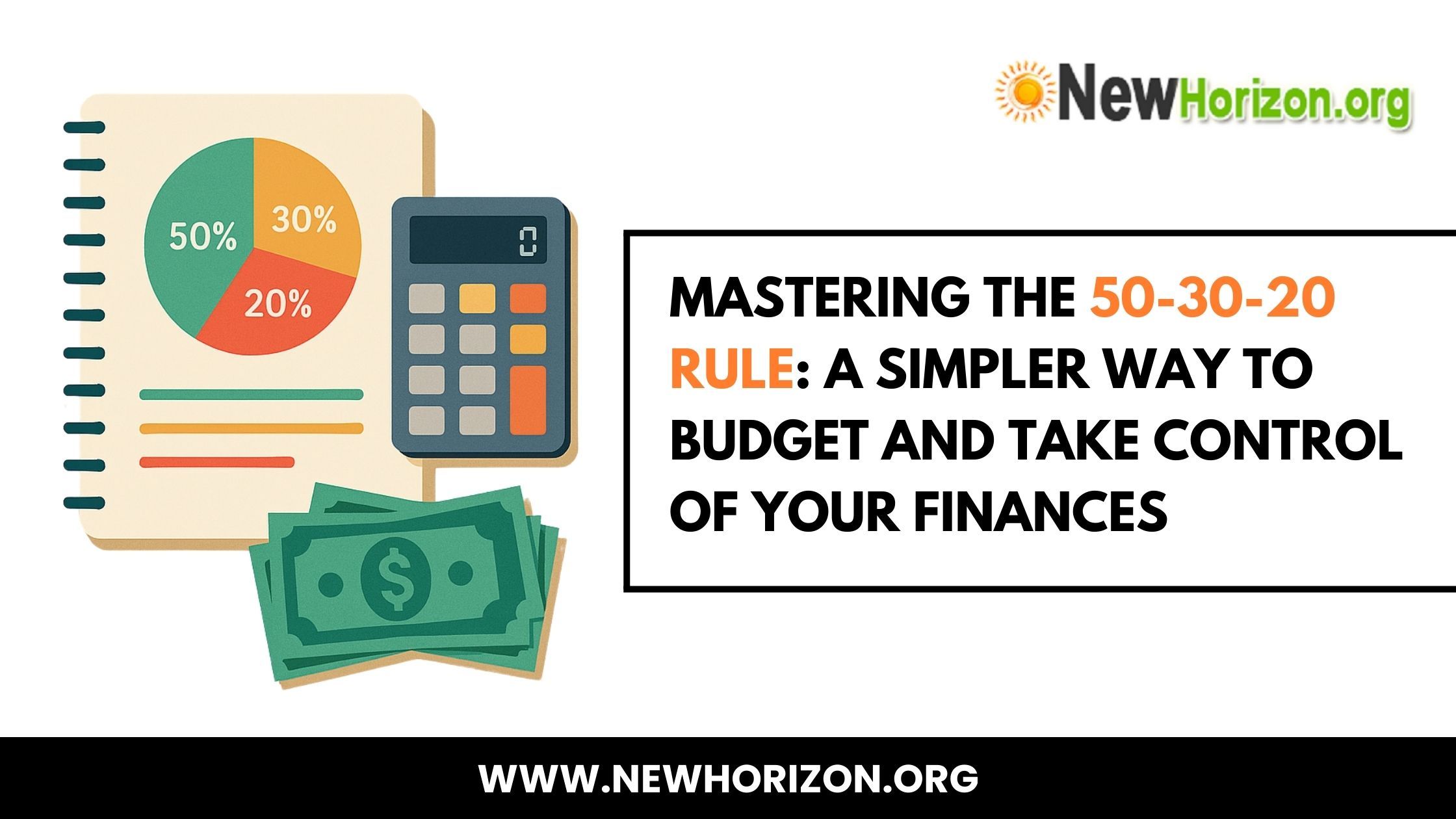
Mastering the 50-30-20 Rule: A Simpler Way to Budget and Take Control of Your Finances
In this article, we’ll cover:
What is the 50-30-20 Rule?
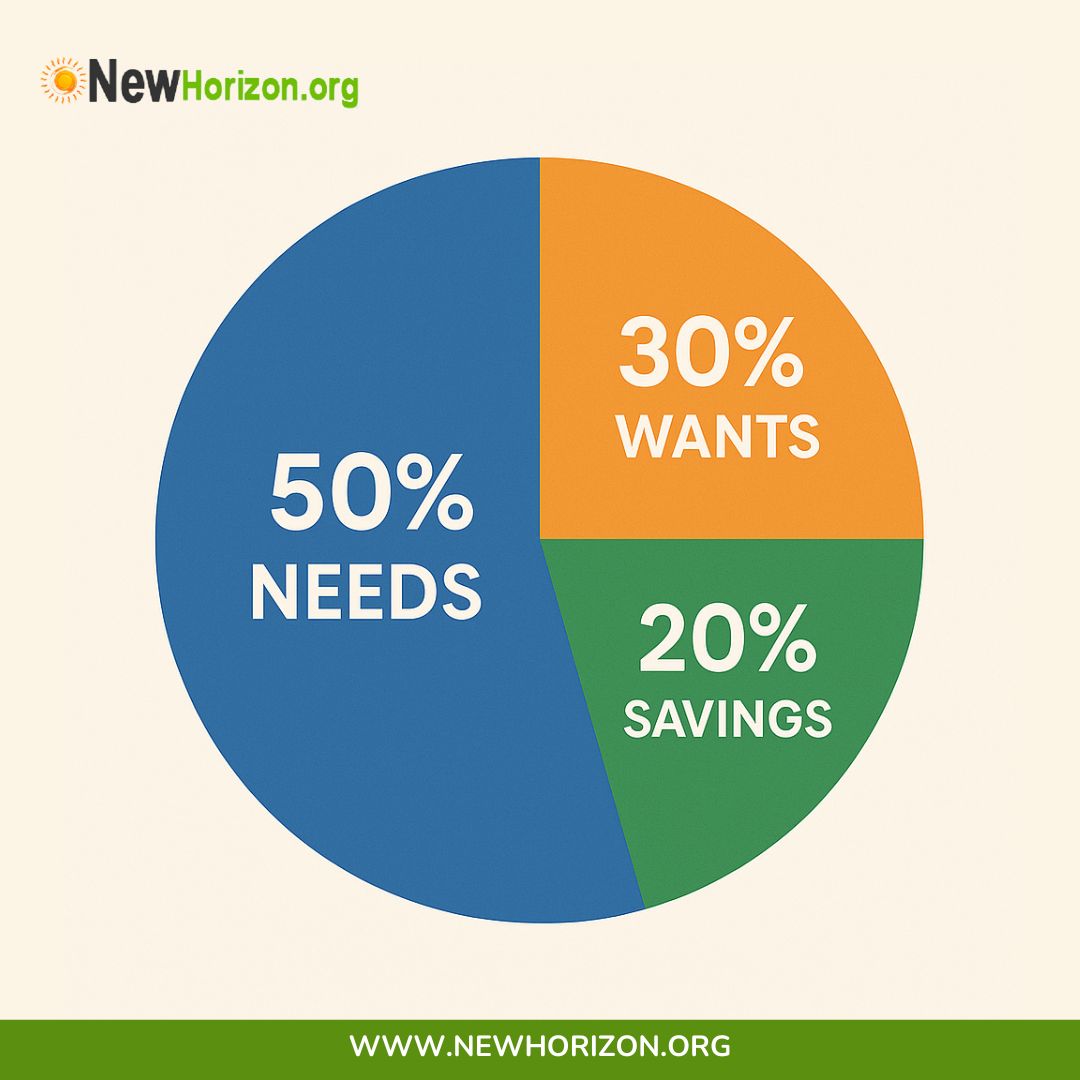 The 50-30-20 budget rule is a straightforward budgeting system that helps you take control of your money by dividing your after-tax income into three simple categories:
-
50% for Needs
-
30% for Wants
-
20% for Savings & Debt Repayment
It’s popular because of its simplicity. You don’t need a finance degree or complicated spreadsheets—just basic math and a bit of discipline.
Why This Rule Works
The beauty of the 50-30-20 rule is its flexibility and clarity. It gives structure to your spending without overwhelming you. It also helps you prioritize your financial future while still allowing room for the things you enjoy.
Budgeting often fails when it feels too restrictive. The 50-30-20 rule avoids that trap by giving you room to live while you save.
Breaking Down the 50-30-20 Rule
 50% – Needs
 50% – Needs
These are the essentials—things you can’t live without. This includes:
-
Rent or mortgage
-
Utilities
-
Car payment or transportation
-
Health insurance
-
Groceries
-
Minimum debt payments
Goal: Keep this category to half of your take-home pay. If it’s more, that’s a signal you may need to adjust your living situation or negotiate bills.
30% – Wants
 30% – Wants
This is the fun part—but it’s also the category where people overspend most often. Wants include:
-
Dining out
-
Subscriptions (Netflix, Spotify, etc.)
-
Hobbies
-
Vacations
-
Clothing beyond essentials
Just because it’s a “want” doesn’t mean it’s unimportant. These expenses make life enjoyable—but they should stay within 30% of your income to stay balanced.
20% – Savings & Debt Repayment
 20% – Savings & Debt Repayment
This final piece of the puzzle is about securing your future. It includes:
-
Emergency savings
-
Retirement contributions
-
Extra payments toward debt
-
Investing
Even small contributions matter. Starting with 5% and working up to 20% is still a win.
How to Implement the 50-30-20 Budget Rule
Let’s say your monthly take-home income is $3,000. Here’s how your budget would break down:
-
$1,500 for needs
-
$900 for wants
-
$600 for savings & debt repayment
Start by tracking your current spending. You might find you’re spending 60% on needs and only 10% on savings. That’s okay. The rule isn’t about perfection—it’s about progress.
What If Your Needs Are Over 50%?
 If you live in a high-cost city or are dealing with debt, your “needs” may exceed 50% of your income. Don’t panic. The key is awareness and gradual adjustments.
Tips:
-
Look for ways to reduce rent or utilities
-
Negotiate bills or shop for better insurance
-
Downsize or refinance loans if possible
-
Avoid lifestyle creep (upgrading too quickly)
Even shaving off 5–10% can open up room in your budget for savings.
Adapting the Rule to Your Life
The 50-30-20 rule isn’t rigid—it’s a framework. If you want to save more aggressively, shift 5–10% from “wants” to “savings.” If you’re temporarily job hunting, you may need to pause savings entirely to cover needs.
Some people use a variation like 70-20-10 or 60-30-10 depending on their goals.
The goal is balance, not guilt.
Why You Should Include Debt Repayment in Savings
Debt repayment—above the minimum—is a form of saving. You’re reclaiming your future income by eliminating interest payments. Whether you’re paying off credit cards, student loans, or medical debt, this category should be a priority.
Bonus tip: Set mini-milestones and celebrate progress.
Tools to Help You Stick to the 50-30-20 Budget Rule

Want to stay on track? Here are a few methods that pair perfectly with this budgeting style:
-
Budget planners (like the ones we offer)
-
Envelope system (label envelopes by category)
-
Budgeting apps like YNAB or Mint
-
Printable trackers
-
Spreadsheet templates
The simpler the system, the more likely you are to stick with it.
Common Mistakes to Avoid
-
Misclassifying wants as needs
Cable TV, takeout, and gym memberships are nice—but not essential. -
Ignoring your actual spending habits
Base your percentages on real numbers, not guesses. -
Making no room for fun
Cutting out all “wants” is unsustainable. Balance is better. -
Not adjusting with life changes
Income changes? Family size increases? Update your budget!
Real-Life Example: Maria’s Budget Makeover
Maria earns $4,000/month after taxes from her full-time job. At first, her budget looked like this:
-
$2,800 on needs
-
$1,100 on wants
-
$100 toward savings
She was stuck in the paycheck-to-paycheck cycle, constantly worried about money.
Step 1: Reviewing Her Budget
She realized:
-
Rent: $1,650
-
Utilities & internet: $250
-
Car payment & insurance: $500
-
Groceries & household items: $400
-
Minimum credit card payment: $150
-
Wants & entertainment: $1,050
Total needs: $2,950—way over the 50% target.
Step 2: Applying the 50-30-20 Budget Rule
Her target should be:
-
$2,000 for needs
-
$1,200 for wants
-
$800 for savings/debt repayment
But with rent alone at $1,650, she had to get creative.
Step 3: Stuck in a Lease
Maria found a smaller apartment for $1,200/month, but she couldn’t move right away—she had six months left on her lease, and breaking it would cost $3,300.
So instead, she:
-
Sublet her spare bedroom for $600/month
-
Paused her gym membership to save $65/month
-
Canceled Netflix, Hulu & Disney+ ($45/month saved)
-
Cut back on takeout ($150/month saved)
-
Refinanced her car loan to save $75/month
-
Switched to cheaper car insurance for another $50/month savings
Total savings: $910/month
Step 4: Starting a Side Hustle
Maria signed up with Rover and began pet sitting and dog walking on weekends. Within 2 months, she was consistently earning $400–$600/month.
She used the side hustle income to:
-
Pay off credit cards
-
Build emergency savings
-
Treat herself (guilt-free) now and then
Step 5: Paying Off Debt and Saving
In just 6 months:
-
She paid off $2,200 in credit card debt
-
Built an emergency fund of $1,500
-
Increased her credit score by 48 points
-
Moved into the $1,200/month apartment
Her new budget looks like:
-
$1,200 – Rent
-
$225 – Utilities & internet
-
$325 – Car + insurance
-
$375 – Groceries
-
$1,125 – Wants
-
$750 – Savings & debt repayment
Maria didn’t just change her budget—she changed her entire outlook.
How This Rule Can Improve Your Credit Over Time
 How This Rule Can Improve Your Credit Over Time
When you stick to this budget:
-
You make on-time payments
-
You avoid adding new debt
-
You lower your credit utilization
-
You build consistent savings habits
Over time, these steps raise your credit score, making future borrowing easier and cheaper.
The Long-Term Payoff
Following the 50-30-20 rule will help you:
-
Break the paycheck-to-paycheck cycle
-
Plan for emergencies
-
Build real wealth
-
Pay down debt
-
Enjoy guilt-free spending
-
Create space for your dreams
Start Your Journey Today with Our Budget Planners
Want to make budgeting even easier? Our budget planners were designed with YOU in mind.
-
Easy to use—even if you hate spreadsheets
-
Built-in trackers for spending, savings, and debt
-
Motivational prompts and goal sheets
-
Beautiful layouts that make planning feel rewarding
Whether you’re just starting or refining your system, we have everything you need to create and maintain your budget.
→ Check out our full collection of budget planners now!