
Good Starter Credit Cards | Build Credit the Right Way
Good Starter Credit Cards: How to Choose Your First Card and Build Credit the Right Way
Looking for good starter credit cards? Whether you’re a college student heading off to school, someone who’s always used cash and never needed credit, or you’re just ready to start building a credit history for the first time — the right starter card can set you up for years of financial strength. The key is knowing which type of card fits your situation and how to use it once you have it.
There are three main paths to your first credit card — secured cards, unsecured cards, and catalog cards. Each one works differently, and the best choice depends on where you’re starting from and what you can afford. Let’s break it down.
What credit card should I get?
When choosing a starter credit card, there are two main categories. Secured and Unsecured.
Option #1 Secured Credit Cards
 1. Secured credit cards – these credit cards require a security deposit that becomes your credit limit. These are great for building credit because:
- They offer guaranteed approval.
- They will report your payment activity monthly, usually to all 3 credit reporting agencies and
- They can act as a savings account for you.
What I mean by that is that after a year of on-time payments, they will become unsecured. And the issuing bank will RETURN your deposit to you.
Sometimes with interest!
So this type of starter credit card will help you to build your credit AND your savings account!
- By finding the right card, you can find a secured credit card with a low-interest rate. We have a list of secured credit cards with their interest rates listed here.
Secured credit cards are how I’ve started all my family when it came time to teach them about building credit and they needed their first credit card.
The Secured Self Visa Credit Card
- Start building credit with all three credit bureaus with the secured Self Visa® Credit Card.
- Apply Now: Intro No Annual Fee with the secured Self Visa® Credit Card^
- No credit check
- No hard inquiry
- $100 minimum security deposit*
*Qualification for the secured Self Visa® Credit Card is based on meeting eligibility requirements, including income and expense requirements and establishment of security interest. Criteria Subject to change.
The secured Self Visa® Credit Card is issued by Lead Bank, Sunrise Banks, N.A., or First Century Bank, N.A., each Member FDIC.
^$0 annual fee for the first year only, $25 annual fee thereafter. Variable APR of 27.99%. Offer valid for new customers only.
Option #2 Unsecured Credit Cards
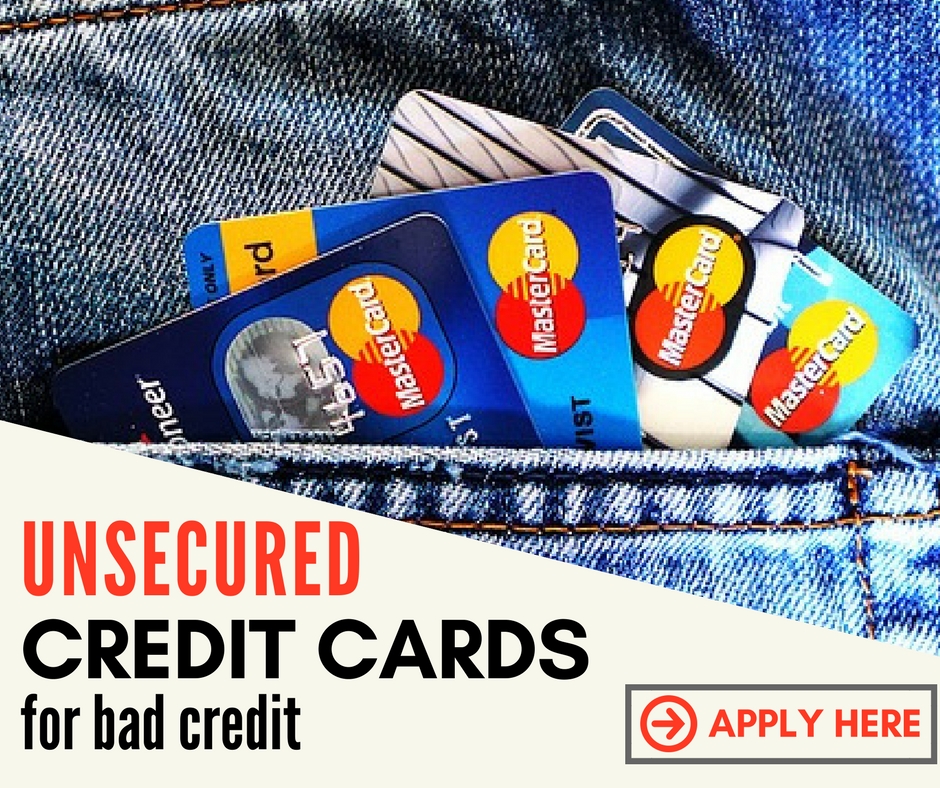
 2. Unsecured credit cards – these starter credit cards are used by our clients that DO NOT have the ability to come up with a security deposit for the secured credit card.
These cards do NOT require a security deposit and will usually give you a credit limit of $300- $700. Interest rates vary depending on the card and they may have a fee they charge which they automatically charge to the card.
They will generally report to all 3 credit reporting agencies. Thus helping you build credit. They also have an easy approval process.
But not all of them are guaranteed approval. Please read the requirements before you apply. You can see our list of unsecured credit cards our clients use for credit building here.
Here are some top 5 recommended unsecured credit cards for individuals with bad credit:
- Reflex® Platinum Mastercard®
- Up to $1,000 Initial Credit Limit
- Less than perfect credit? We understand. The Reflex Mastercard is ideal for people looking to rebuild their credit.
- Monthly reporting to the three major credit bureaus
- Apply with Confidence! There is no impact to your credit score if you’re not approved. See terms.
- Surge® Platinum Mastercard®
- Up to $1,000 Initial Credit Limit
- See if you Pre-Qualify with No Impact to your Credit Score
- Less than perfect credit? We understand. The Surge Mastercard is ideal for people looking to rebuild their credit.
- Apply with Confidence! There is no impact to your credit score if you’re not approved. See terms.
- Destiny Mastercard®

- Milestone® Mastercard®
- Greater access to credit than before – $700 credit limit
- Get a Mastercard accepted online, in store and in app
- Unsecured credit card, no deposit required
- CreditSoup
- A better way to get a Card Offer!
- Credit Cards
- Search, Compare, Apply!

Choosing a beginner credit card(s)
 Both methods I described above are great ways to start building credit. It’s up to you which one you choose. But when choosing your first credit card, keep the following in mind.
- You want to choose a credit card that uses a SOFT inquiry. What that means is that it WILL NOT have an impact on your credit score. A HARD inquiry (most common type) will drop your credit score by a few points. If you are applying for several credit cards, its best to apply at the same time. That way you lessen the impact the hard inquires will have on your credit score.
- You want to make sure it reports to at least 1 credit reporting agency. Experian, Equifax or Trans Union. Its best if they report to all 3 but having at least 1 will help you to build credit.
- You want to be a responsible credit user. You want to keep your credit usage BELOW 35%.
- If you can, pay off your credit cards at the end of the month.
- You want to practice good credit habits. That means paying on time EVERY TIME. Even if it’s just the minimum payment
How to build credit without a credit card
 Another way to build credit WITHOUT actually having to get a credit card is to ask a parent, friend or family member to add you as a signer to one of their credit cards with age, large credit line, and good payment history. The benefits to you are:
- you add an aged line of credit to your credit report.
- you add a large line of credit to your credit report
- you add payment history to your credit report
Your friend or family member DO NOT need to give you access to their credit card! Many people may hesitate to allow you to use their credit to BUILD your credit.
But if you advise them that it WILL NOT impact their credit score, you won’t have a card so you won’t be able to purchase things using that card, and it will help you to start building your credit in the best possible way. You may be able to use this method to build your credit WITHOUT having to open a credit card account.
What Makes a Good Starter Credit Card?
Not all first credit cards are equal. Before you apply for anything, here’s what to look for so you end up with a card that actually helps you build credit instead of costing you money for nothing.
Credit bureau reporting. This is the most important feature in any starter card. If the card issuer doesn’t report your payment activity to at least one of the three major credit bureaus — Equifax, Experian, and TransUnion — the card isn’t building your credit no matter how responsibly you use it. Secured cards and most unsecured cards report automatically. Catalog cards often require paid reporting or self-reporting. Always confirm before you apply.
Low or manageable fees. Many starter cards charge annual fees, monthly fees, or account setup fees. That’s normal — card issuers charge more for people with no credit history because there’s more risk. But compare the fees across your options. A $75 annual fee on a $500 credit limit is very different from a $200 annual fee on the same limit. Good starter credit cards keep the fees reasonable so you’re not paying more in fees than you’d spend on actual purchases.
A clear path to something better. The best starter cards aren’t meant to be your forever card. They’re a stepping stone. Look for cards that offer credit limit increases after 6-12 months of on-time payments, or secured cards that graduate to unsecured cards and return your deposit. You want a card that rewards you for using it well by giving you access to better terms over time.
Soft inquiry pre-qualification. Some cards let you check if you’re likely to be approved before you formally apply. This is called a soft inquiry and it doesn’t affect your credit score. It’s especially useful when you’re just starting out because a hard inquiry from a denied application can actually lower your score — the opposite of what you want when you’re trying to build credit.
Your First 12 Months: How to Build Credit the Smart Way
Getting the card is the easy part. What you do in the first year determines whether your credit score goes up or stays flat. Here’s a month-by-month approach that works.
Month 1: Set up the right habits from day one. As soon as your card arrives, set up autopay for at least the minimum payment. This guarantees you’ll never have a late payment on your record. Then make one small purchase — $20, $30, whatever — and pay it off when the statement comes. That’s it. You don’t need to use the card heavily. You just need to show activity and on-time payment.
Months 2-3: Keep it small and consistent. Use the card for one or two small purchases each month. Gas, groceries, a subscription — things you’d buy anyway. Pay the full balance each month so you never pay interest. Keep your spending well below 30% of your credit limit. If your limit is $300, keep your balance under $90 at any given time.
Months 4-6: Check your progress. Pull your credit report for free at AnnualCreditReport.com. Verify that your card is showing up and that your payments are being reported as on-time. If something looks wrong — the card isn’t reporting, or a payment shows as late when it wasn’t — contact the card issuer right away. By this point you should start seeing your credit score begin to move upward.
Months 7-12: Start thinking about your next step. After 6+ months of perfect payment history, you’re in a stronger position. If you have a secured card, check whether the issuer will upgrade you to an unsecured card and return your deposit. If you have a catalog card, you might now qualify for a secured or unsecured card that you can use anywhere. Don’t close your first card when you get a new one — length of credit history matters, and your oldest account helps your score.
Mistakes First-Time Cardholders Make
These are the traps that catch people when they’re new to credit. Avoid them and you’ll be ahead of most people.
Maxing out the card. A $500 credit limit feels like free money when you’ve never had access to credit before. It’s not. Using all or most of your available credit hurts your score. Credit utilization — the percentage of your limit that you’re using — is one of the biggest factors in your credit score. Keep it low.
Only paying the minimum. Minimum payments keep you in good standing, but interest builds on whatever balance remains. A $200 purchase can cost you $300 or more if you only make minimum payments over several months. Pay the full balance whenever you can.
Applying for too many cards at once. It’s tempting to apply for everything once you realize you can get approved. Don’t. Each application can trigger a hard inquiry that lowers your score. Start with one good starter card, use it well for 6-12 months, and then consider adding a second card strategically.
Missing a payment. Even one late payment can drop your score significantly and stay on your credit report for seven years. Set up autopay and calendar reminders. There’s no excuse for a late payment when autopay exists.
Closing your first card when you get a better one. Your first card becomes your oldest credit account. Closing it shortens your credit history, which lowers your score. Keep it open even if you rarely use it. Put a small recurring charge on it — a streaming service, for example — and let autopay handle it.
Which Credit Card for Beginners Is Right for You?
Choosing your first credit card for beginners can feel overwhelming with so many options out there. The best approach is to match the card type to your current situation. If you have some cash to put down and want the lowest fees, start with a secured card.
If you can’t afford a deposit but need a card right away, an unsecured card for bad or no credit is your best bet. And if you just want guaranteed approval with no credit check, a catalog card gets you started with zero risk.
The most important thing isn’t which card you pick — it’s what you do with it after you get it. Pay on time every month, keep your balance low, and let the positive payment history build your credit scores over time.
Frequently Asked Questions
What is the easiest starter credit card to get approved for?
Catalog cards like the ones on our catalog credit cards page offer guaranteed approval with no credit check. If you need a card you can use anywhere, secured credit cards are the next easiest — they require a deposit but approve most applicants regardless of credit history. Check out our secured credit cards page to compare options.
How long does it take to build credit with a starter card?
Most people start seeing a credit score appear after 3-6 months of card activity being reported to the credit bureaus. Meaningful improvement — enough to qualify for better cards with lower fees — usually takes 6-12 months of consistent on-time payments and low credit utilization.
Should I get a secured card or an unsecured card as my first card?
If you can afford to put down a $200-$500 deposit, a secured card is usually the best starting point. They have lower fees, they report to all three bureaus, and many of them graduate to unsecured cards after a year. If you can’t put down a deposit, an unsecured card for bad or no credit is a solid alternative — just be aware that fees and interest rates tend to be higher.
Can I build credit without getting a credit card at all?
Yes — one option is to ask a family member to add you as an authorized user on one of their existing credit cards. They don’t have to give you a physical card or let you make purchases. Their positive payment history and credit limit get added to your credit report, which can jumpstart your credit score. This works best when the card they add you to has a long history, a high limit, and perfect payment history.
Will applying for a starter card hurt my credit score?
It depends on the card. Some offer pre-qualification with a soft inquiry, which doesn’t affect your score at all. If you formally apply and the issuer runs a hard inquiry, it may lower your score by a few points temporarily. That’s normal and the impact fades within a few months. The positive effect of having and using the card responsibly far outweighs the small dip from one hard inquiry.