

Hard and Soft Inquiries: The Hidden Forces Shaping Your Credit Score
In this article, we’ll take a look at:
- What is a Hard Inquiry?
- How Hard Pulls Inquiries Affect Credit Score
- Why You Should Avoid a Hard Inquiry Before Applying for a Mortgage
- How Long Do Hard Inquiries Last?
- How Many Points Does a Hard Inquiry Affect Credit Score?
- How Can I Remove Hard Inquiries?
- What is a Soft Inquiry?
- Key Differences Between Hard and Soft Inquiries
- When are Soft Inquiries Useful?
- Myth-Busting: Common Misconceptions about Soft Inquiries
- Leveraging Soft Inquiries for Financial Strategy
- When Soft Inquiries Can Help Prevent Hard Inquiries
What is a Hard Inquiry?
 A hard inquiry, also known as a hard pull, or hard credit check, occurs when a financial institution or lender checks your credit report to make a lending decision. This inquiry can leave a negative impact on your credit score because it indicates that you’re seeking credit, which can be perceived as a risk factor by credit scoring models.
Hard credit checks typically happen when you apply for credit cards, personal loans, auto loans, mortgages, or any other form of credit. In contrast, a soft inquiry occurs when you or a company checks your credit report for non-lending purposes—such as background checks or pre-approved offers—and does not affect your credit score.
For example, if you apply for a new credit card, the issuer will perform a hard inquiry to assess your creditworthiness. If you’re actively shopping around for loans or other forms of credit, several hard inquiries over a short period could have a noticeable effect on your credit score.
How Hard Pulls Inquiries Affect Credit Score
 The impact of hard inquiries on your credit score can vary depending on your overall credit profile, but typically, a single hard inquiry will lower your credit score by 5-10 points. This might not seem significant, but it becomes more concerning when you’re close to a credit tier that could result in higher interest rates or even rejection of credit.
Additionally, too many hard inquiries in a short period can signal to lenders that you’re in financial distress, have potential high credit usage or you are overextending yourself, which could lower your creditworthiness. Fortunately, credit scoring models like FICO and VantageScore recognize the difference between multiple inquiries for the same type of loan (e.g., mortgages or auto loans) and treat them as a single inquiry if they occur within a certain time frame—usually 14 to 45 days. This “shopping window” encourages consumers to shop around for the best rates without the fear of damaging their credit.
Why You Should Avoid a Hard Inquiry Before Applying for a Mortgage
When you’re preparing to apply for a mortgage, avoiding hard inquiries is essential for securing the best possible terms. Here’s why:
Financial Planning
 Before applying for a mortgage, meticulous financial planning is crucial. Hard inquiries could lower your credit score just enough to push you into a less favorable interest rate bracket. That’s why it’s wise to avoid any new credit applications or large financial decisions in the months leading up to applying for a mortgage. Aim to keep your score as high as possible and maintain a healthy credit score buffer—ideally, 20-30 points above the minimum score required for the best mortgage rates.
Additionally, consider your debt-to-income ratio (DTI). When hard inquiries lead to new accounts, they can increase your overall debt, which will, in turn, raise your DTI. Mortgage lenders pay close attention to this ratio, so keeping it in check is vital for approval.
Pre-Approval Process
 During the pre-approval stage of the mortgage process, lenders will review your credit to determine if you’re eligible for a loan and what interest rate you’ll be offered. Pre-approval is a more in-depth process than pre-qualification because it involves a hard inquiry and a thorough review of your financial background.
It’s important to limit hard inquiries before the pre-approval process to keep your credit score in optimal condition. Additionally, while rate shopping for a mortgage, be mindful of credit scoring models’ shopping windows. These windows typically last 14 to 45 days, during which multiple inquiries from mortgage lenders are treated as a single inquiry. If you plan to shop around, do so within this window to minimize the impact on your credit score.
Impact on Mortgage Rates
 One of the biggest concerns with hard inquiries when applying for a mortgage is their effect on interest rates. Even a small dip in your credit score can move you from one tier to another in a lender’s pricing model, leading to higher interest rates. For example, if a hard inquiry drops your score from 720 to 710, you might find yourself paying significantly more over the life of the loan.
This impact is amplified with larger loan amounts, like mortgages, where the interest rate difference over 15 or 30 years could mean thousands of extra dollars in payments. Therefore, being cautious with hard inquiries can save you from costly rate increases.
How Long Do Hard Inquiries Last?
Hard inquiries remain on your credit report for up to two years. However, their impact on your credit score diminishes over time. Most of the negative effect is felt within the first few months, and after 12 months, they generally have little to no impact on your score.
It’s important to note that while hard inquiries do stay visible on your report for two years, they stop affecting your credit score after 12 months. This is good news for borrowers who have been diligent about credit management after a series of inquiries, as their score will recover over time.
How Many Points Does a Hard Inquiry Affect Credit Score?
The number of points a hard inquiry affects your credit score can vary based on your credit profile. Generally, a single inquiry lowers your score by 5 to 10 points. However, the actual effect depends on factors such as:
- Your overall credit history: Those with a longer credit history and higher scores might see less impact, while those with a shorter credit history could see a more significant dip.
- The number of recent inquiries: If you’ve had several inquiries in a short period, the impact may be cumulative.
- Other factors at play: New credit accounts associated with inquiries could further lower your score if they add to your debt or reduce the average age of your accounts.
How Can I Remove Hard Inquiries?
Removing hard inquiries from your credit report can be challenging, but there are a few legitimate methods to do so:
 Disputing Unauthorized Inquiries
 Disputing Unauthorized Inquiries
If a hard inquiry appears on your report that you did not authorize, you can dispute it with the credit bureaus. The Fair Credit Reporting Act (FCRA) requires the bureaus to investigate disputes within 30 days, and if the inquiry was made in error, it will be removed from your report.
Removing Inquiries via Negotiation
In some cases, you may be able to negotiate with lenders or credit issuers to remove a hard inquiry, especially if it was made under special circumstances or resulted from a misunderstanding.
Building Credit After Multiple Inquiries
If you’ve accumulated several hard inquiries, your best option is to focus on credit repair strategies. Make timely payments, reduce credit utilization, and avoid applying for new credit until your score has recovered. Over time, the effect of the inquiries will diminish, and you can rebuild your credit.
What is a Soft Inquiry?
While hard inquiries can impact your credit score, soft credit inquiries —also known as soft pulls—do not. A soft inquiry occurs when your credit report is checked for reasons that don’t involve a new application for credit.
 These inquiries can happen for several reasons, such as:
- Pre-Approval Offers: Many credit card companies or lenders perform soft credit inquiries when determining whether to send you pre-approval offers. These checks allow them to gauge your creditworthiness without impacting your score.
- Background Checks: Employers, landlords, or insurance companies might conduct soft inquiries as part of a background check, especially when you’re applying for a job, renting an apartment, or setting up new insurance policies.
- Self-Inquiries: Whenever you check your own credit score or request a copy of your credit report from a credit bureau, it’s considered a soft inquiry. It’s a great way to monitor your credit health regularly without risking a drop in your score.
Key Differences Between Hard and Soft Inquiries
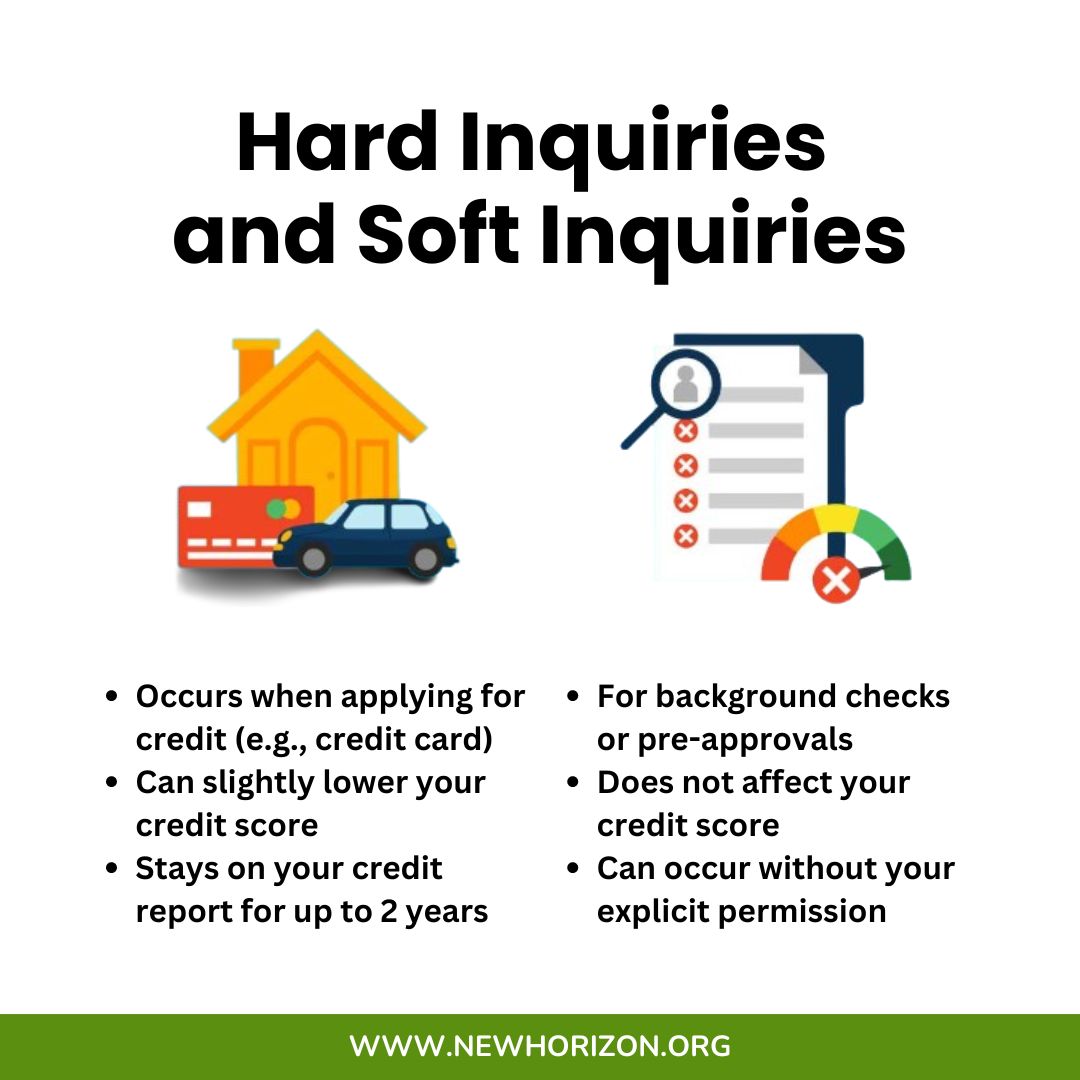
- Impact on Credit Score: The most significant difference is that soft inquiries do not affect your credit score, whereas hard inquiries typically result in a temporary dip in your score.
- Purpose: Hard inquiries occur when you’re applying for new credit, while soft inquiries happen for non-lending purposes, like pre-approvals, background checks, or personal credit monitoring.
- Visibility to Lenders: Hard inquiries are visible to anyone who pulls your credit report, such as lenders and financial institutions, while soft inquiries are only visible to you when you check your own report. This means that lenders won’t be able to see how often you’ve checked your own credit or received pre-approval offers.
When are Soft Inquiries Useful?
Soft inquiries are particularly useful for consumers who want to be aware of their credit status without risking any changes to their credit score. Here are some common uses:
 Credit Monitoring: Regularly checking your credit score and credit report allows you to spot errors, fraudulent activities, or negative marks that could damage your score. Many credit monitoring services let you see your credit score without initiating a hard inquiry.
- Pre-Qualification for Credit: If you’re shopping around for a new credit card, loan, or mortgage but aren’t ready to commit yet, some lenders offer pre-qualification tools that perform soft inquiries to estimate your approval odds. This allows you to explore your options without harming your credit score.
- Job Applications: Many employers run background checks that include soft inquiries on your credit report. These inquiries give them a sense of your financial responsibility but won’t affect your score.
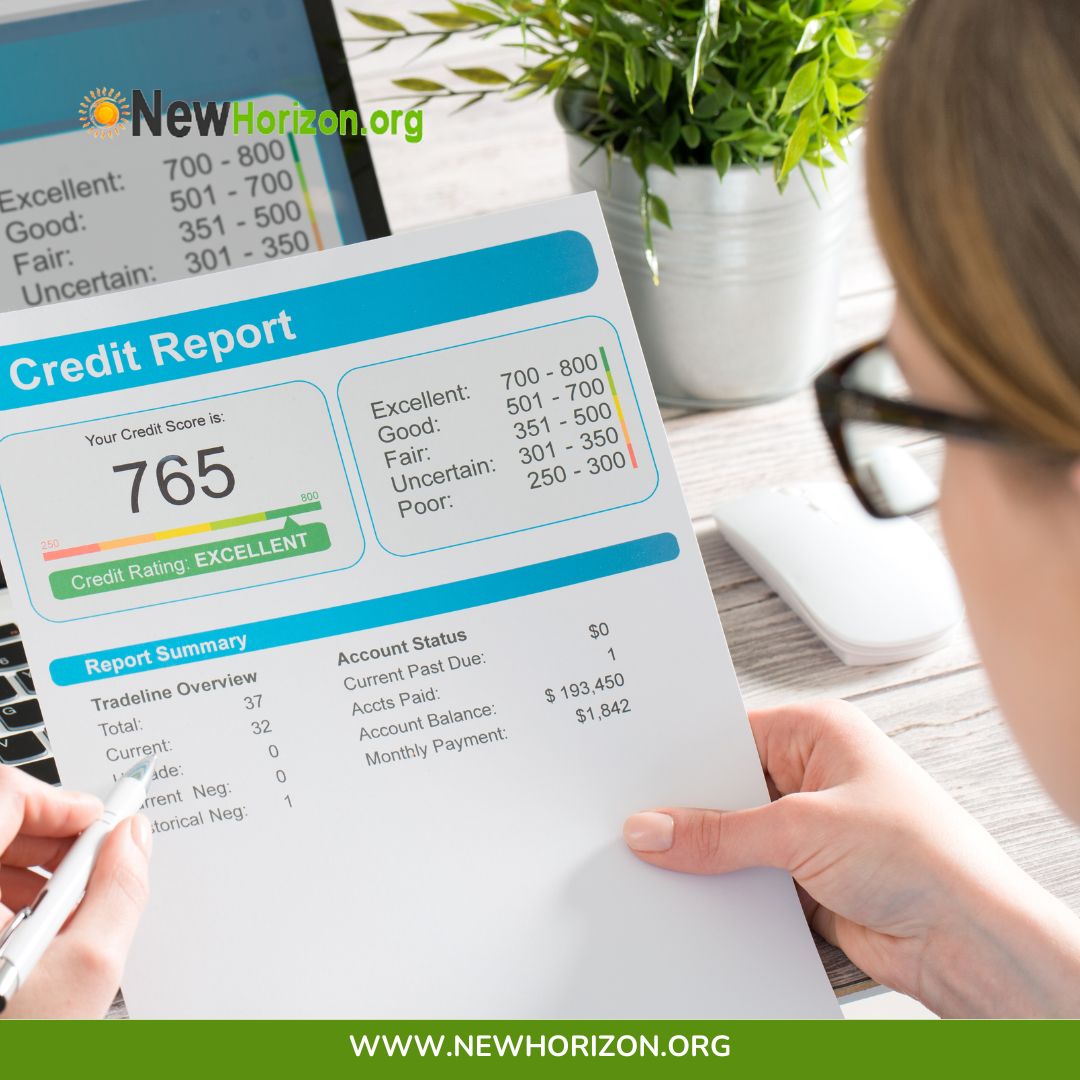 Credit Monitoring: Regularly checking your credit score and credit report allows you to spot errors, fraudulent activities, or negative marks that could damage your score. Many credit monitoring services let you see your credit score without initiating a hard inquiry.
Myth-Busting: Common Misconceptions about Soft Inquiries
- Myth 1: Soft Inquiries are Hidden from Your Credit Report: While soft inquiries don’t affect your credit score, they still appear on your personal credit report when you pull it. However, they’re not visible to lenders, so you don’t have to worry about these checks negatively impacting your chances of getting approved for a loan or credit.
- Myth 2: All Credit Checks are Hard Inquiries: Many people assume that every credit check will impact their credit score. This isn’t the case. Only credit checks that are connected to a credit application (e.g., for a loan or credit card) will result in a hard inquiry.
- Myth 3: Pre-Approval Offers are Bad for Your Credit: Since pre-approval offers often involve soft inquiries, they won’t hurt your credit score. However, if you decide to apply for one of these offers, the lender will typically conduct a hard inquiry to finalize the approval, which could affect your score.
Leveraging Soft Inquiries for Financial Strategy
Consumers can use soft inquiries strategically to protect their credit score while still exploring financial options. For example:
 Pre-Qualified Offers: By taking advantage of pre-qualification tools, you can shop for credit cards, auto loans, or personal loans without impacting your score. Many credit card issuers offer online tools where you can check for pre-qualified offers with just a soft pull.
- Credit Awareness: Consistently checking your own credit is a smart way to stay on top of your credit health. If you notice your score is trending downward, you can take action before it drops too low. Additionally, soft inquiries help ensure you’re aware of any unauthorized hard inquiries, which could indicate fraud or identity theft.
 Pre-Qualified Offers: By taking advantage of pre-qualification tools, you can shop for credit cards, auto loans, or personal loans without impacting your score. Many credit card issuers offer online tools where you can check for pre-qualified offers with just a soft pull.
When Soft Inquiries Can Help Prevent Hard Inquiries
Being mindful of your credit report and score through regular soft inquiries can help prevent unnecessary hard inquiries. For instance, using pre-qualification tools to gauge your chances of approval for credit products means you can avoid applying for credit you’re unlikely to get—thereby avoiding the risk of a hard inquiry and a rejection, which could damage your score further.
Furthermore, regularly monitoring your credit through soft inquiries can help you stay in the best position to apply for new credit when the time is right, reducing the risk of multiple hard inquiries that could hurt your credit in the long term.